Rupee erosion, taxes, AI leadership gaps, and stalled manufacturing are making the case for global allocation.
The real question is no longer whether India remains compelling. It’s whether an India-only portfolio is enough.
Most Indian investors still evaluate wealth in rupees. But an increasing share of life goals is effectively linked to global currencies whether it is foreign education, international travel, imported technology, or lifestyle inflation tied to the dollar.
The answer is increasingly clear: Indian investors need at least some of their money working in dollar terms
Six Structural Reasons
Rupee Depreciation
Global Returns
Diversification
AI Supercycle
Manufacturing Gap
Rising Tax Costs
The Return & Diversification Case
02
Reasons 1 through 4 for global allocation
01
The Rupee Quietly Erodes Purchasing Power
The Indian rupee has depreciated against the US dollar by about 3.5% per year on average over the last 20 years. Over a decade or two, this acts like a silent drag on global purchasing power. Owning dollar-denominated assets creates a natural hedge because the currency movement itself boosts the rupee value of the investment over time.
~3.5%
Average annual INR depreciation vs. USD over 20 years a silent but compounding drag on wealth.
02
Global Markets Have Compounded Strongly
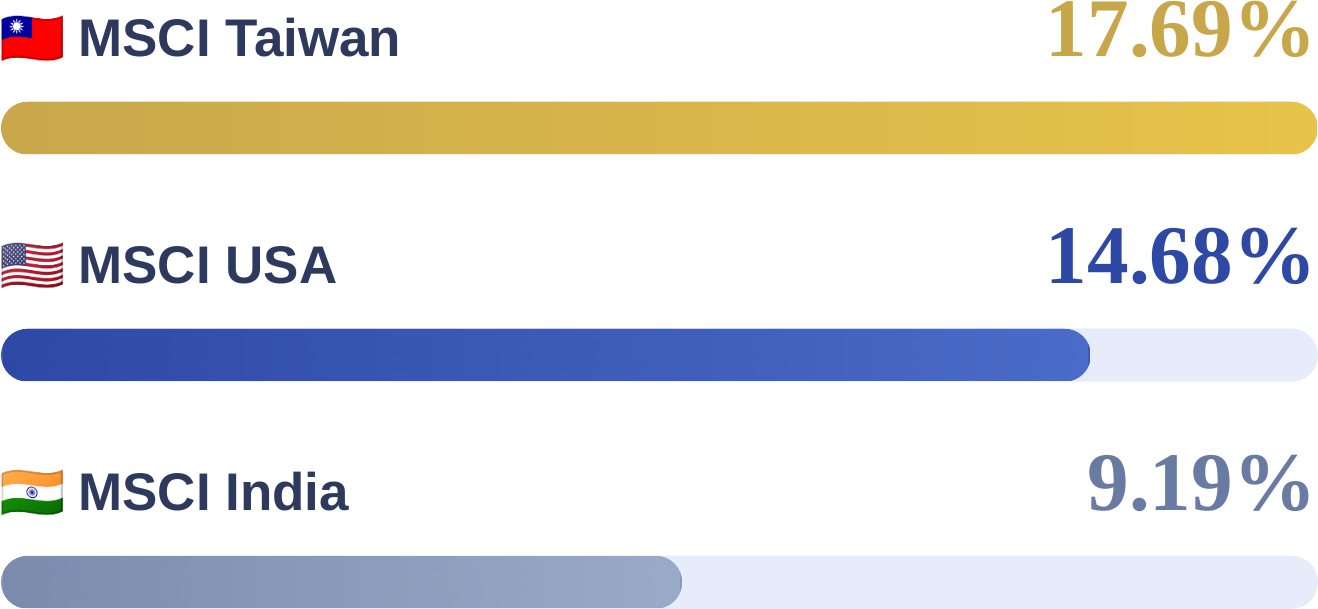
MSCI USA delivered a 10-year annualized net return of 14.68% in USD terms, while MSCI Taiwan Capped delivered 17.69%. MSCI India delivered 9.19% before considering the additional rupee depreciation benefit.
10-Year Annualized Returns (USD Terms)
MSCI Index Net Returns · Source: MSCI
★ Indian investors receive an additional tailwind from INR depreciation (~3.5% p.a.) when converting USD returns back to rupees.
03
Diversification Is Basic Portfolio Discipline
India accounts for only a small share of global market capitalization, yet most Indian portfolios remain almost entirely exposed to domestic equities. That means investors are making an outsized bet on one country’s valuation cycle, one policy environment, and one macro story.
04
The AI Supercycle Is Being Monetized Elsewhere
The companies monetizing AI at scale cloud providers, chip designers, advanced software firms, and semiconductor leaders are disproportionately listed in the US and Taiwan. Investors who want direct equity exposure to the AI buildout need overseas allocation.
Cloud Providers
Chip Designers
Advanced Software
Semiconductors
Taxes, Manufacturing & the India-Plus Framework
03
Reasons 5 & 6 — and the final conclusion
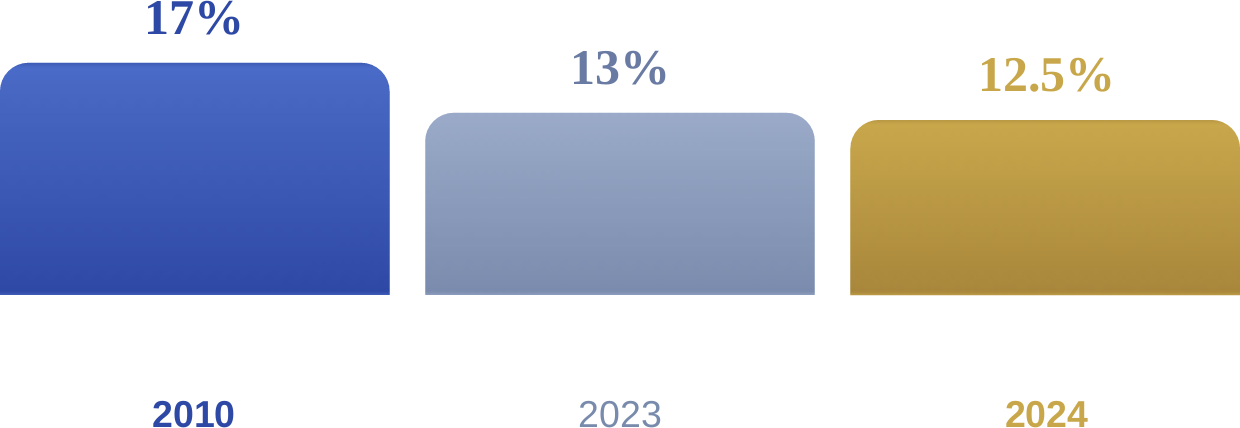
Manufacturing Value Added (% of GDP)
India’s manufacturing share has not expanded as expected
the ambition hasn’t matched the data.
Reason 5: Taiwan and export-oriented economies built listed corporate champions through deep manufacturing ecosystems. India is still working toward that scale.
Reason 6 Risingcosts
TAX / COST
RATE
LTCG on Listed Equity
12.5%
STCG on Listed Equity
20%
STT — Equity Delivery
0.1%+0.1%
STT — Futures (from Apr 2026)
0.05%
STT — Options Premium (from Apr 2026)
0.15%
Post July 2024 budget changes. Rising taxes & transaction friction strengthen the case for broader geographic allocation.
The India – Plus Framework
India + World
Not India vs. the world — own both.
Currency Hedge
Dollar assets protect purchasing power as the rupee weakens structurally over time.
Return Potential
US and Taiwan markets have delivered stronger USD compounding over the last decade.
True Diversification
Reduce dependence on one country, one currency, and one policy cycle.
AI & Manufacturing Access
Global markets offer exposure to sectors and ecosystems India is still building toward.
Tax Efficiency Lens
Rising domestic taxes and transaction charges make broader allocation more relevant.
The disciplined investor does not choose between India and the world; the disciplined investor owns both.










 by
by  Mutual Funds / Equity PMS
 NRI – Invest in India
 Financial Planning
 Legacy Planning / Family Office Solutions
 General Insurance
 Life Insurance